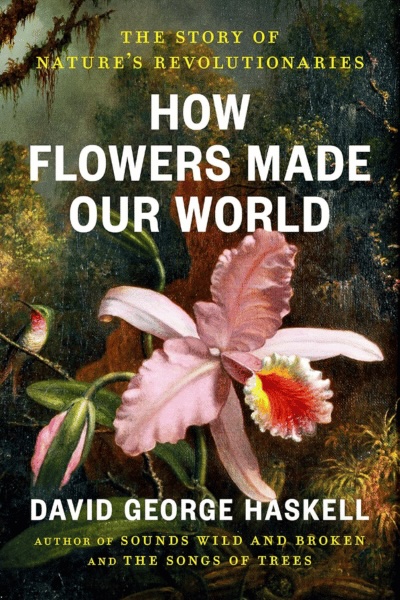

“Mr. Haskell has made a career of explaining the lives of plants to spellbound audiences… ‘How Flowers Made Our World,’ a seamless melding of poetry and science, expands [his] focus to plant habitats all over the world… His exuberant prose engages all our senses, beckoning us, the way a flower would a curious bee, into a world of hidden wonders.” — Wall Street Journal

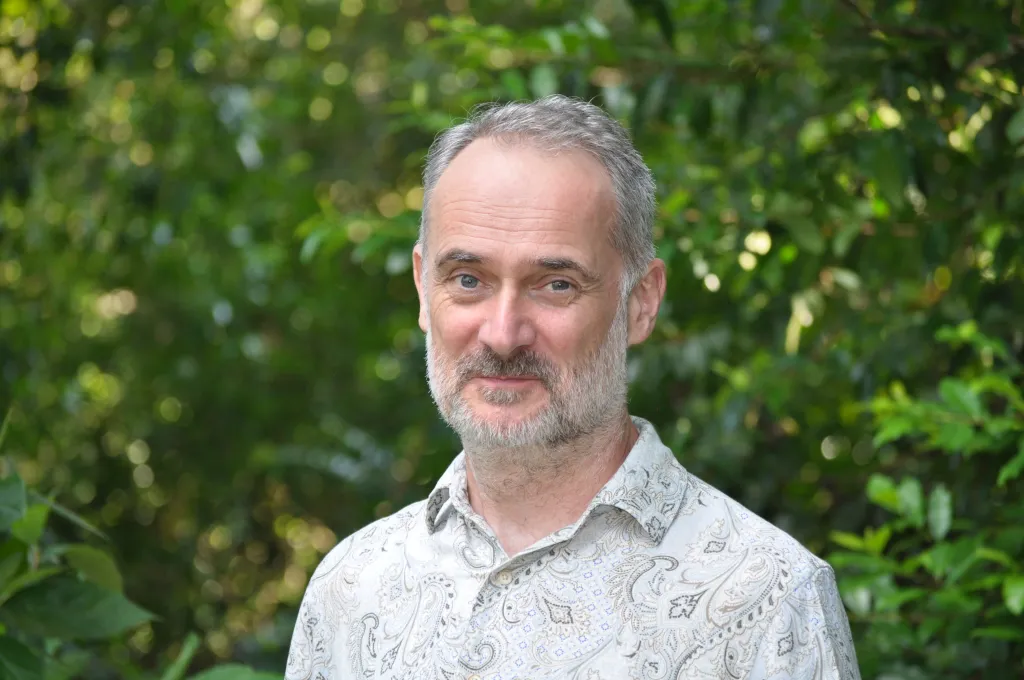
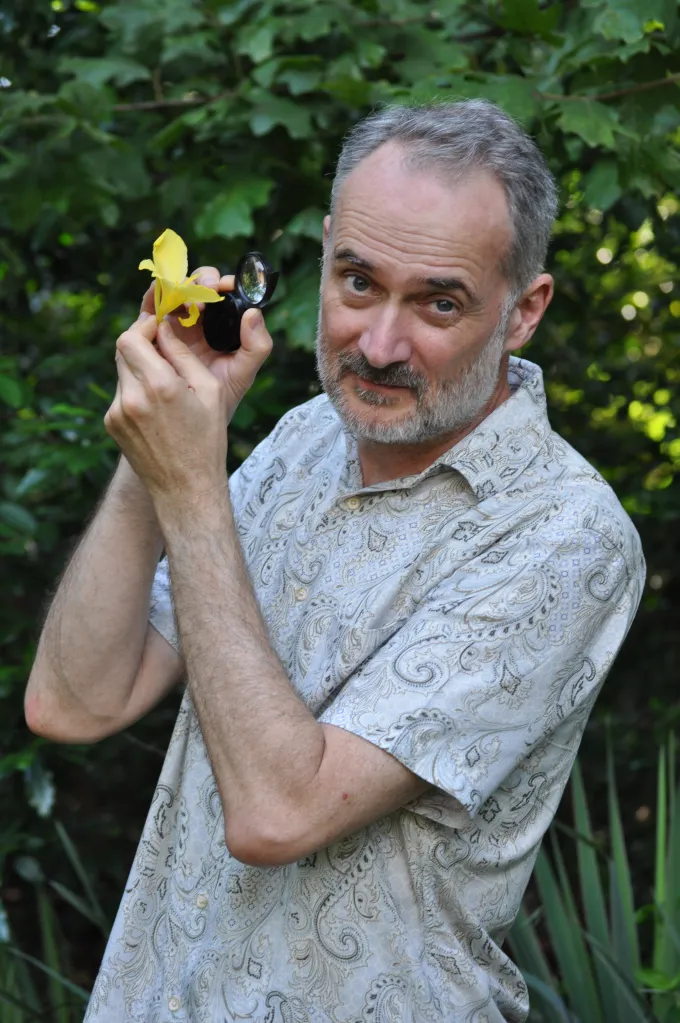
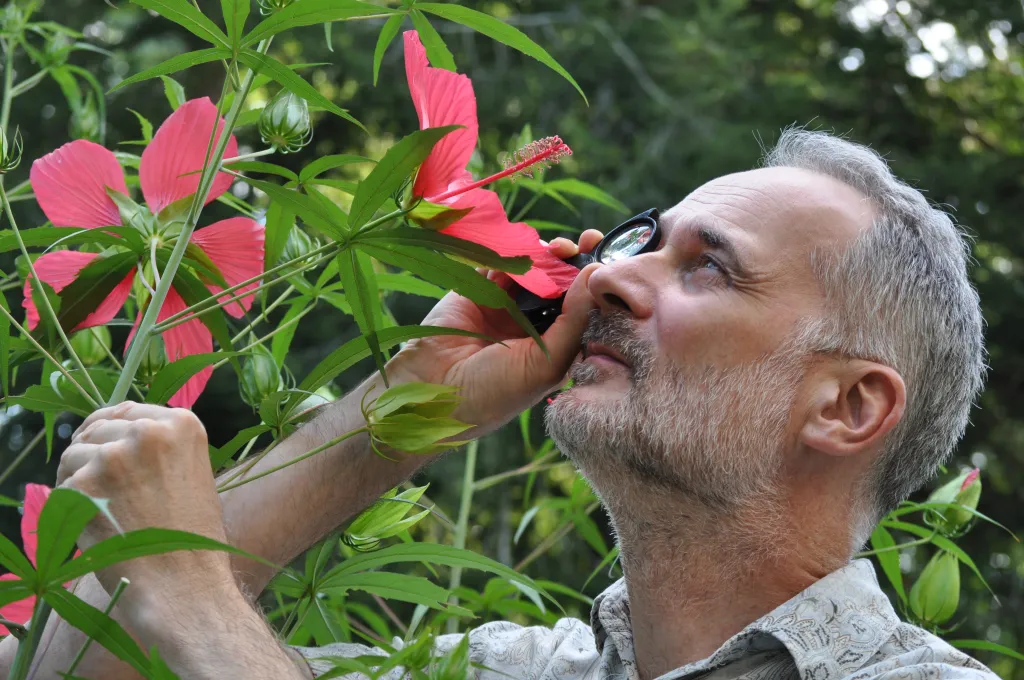
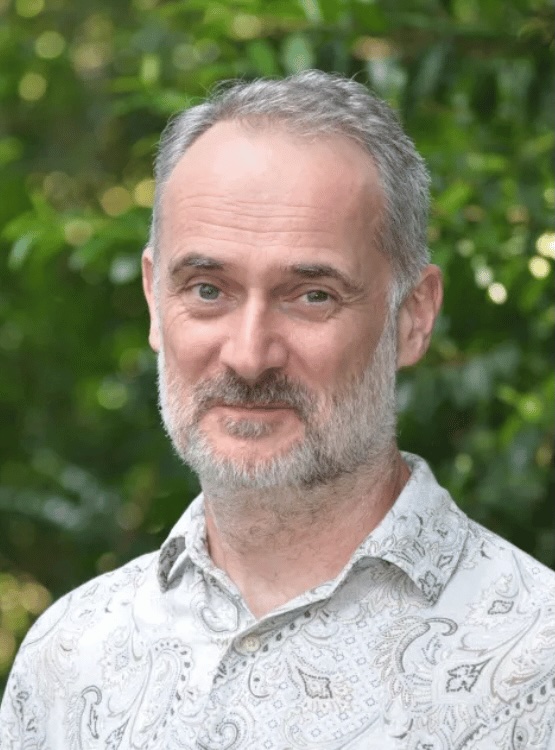
David George Haskell is a writer and biologist acclaimed for his lyrical explorations of the living world. His most recent book, How Flowers Made our World, explores the creative powers of flowering plants. Haskell is a two-time finalist for the Pulitzer Prize in General Nonfiction, in 2012 for The Forest Unseen and in 2022 for Sounds Wild and Broken. His 2017 book, The Songs of Trees won the John Burroughs Medal.

Other literary honors include an Award in Literature from American Academy of Arts and Letters, two-time finalist for the PEN/E. O. Wilson Literary Science Writing Award, winner of the Acoustical Society of America’s Science Communication Award, the National Academies’ Best Book Award, Iris Book Award, Reed Environmental Writing Award, and National Outdoor Book Award for Natural History Literature.

Haskell has also written essays and multimedia experiences for The New York Times, Emergence Magazine, and other venues. He is a Fellow of the Linnean Society of London, a Guggenheim Fellow, and is Adjunct Professor of Environmental Sciences at Emory University. Haskell’s classes have received national attention for their integration of body, mind, and community. The Carnegie and CASE Foundations named him Professor of the Year for Tennessee for “extraordinary dedication to undergraduate teaching”.
David's Featured Titles

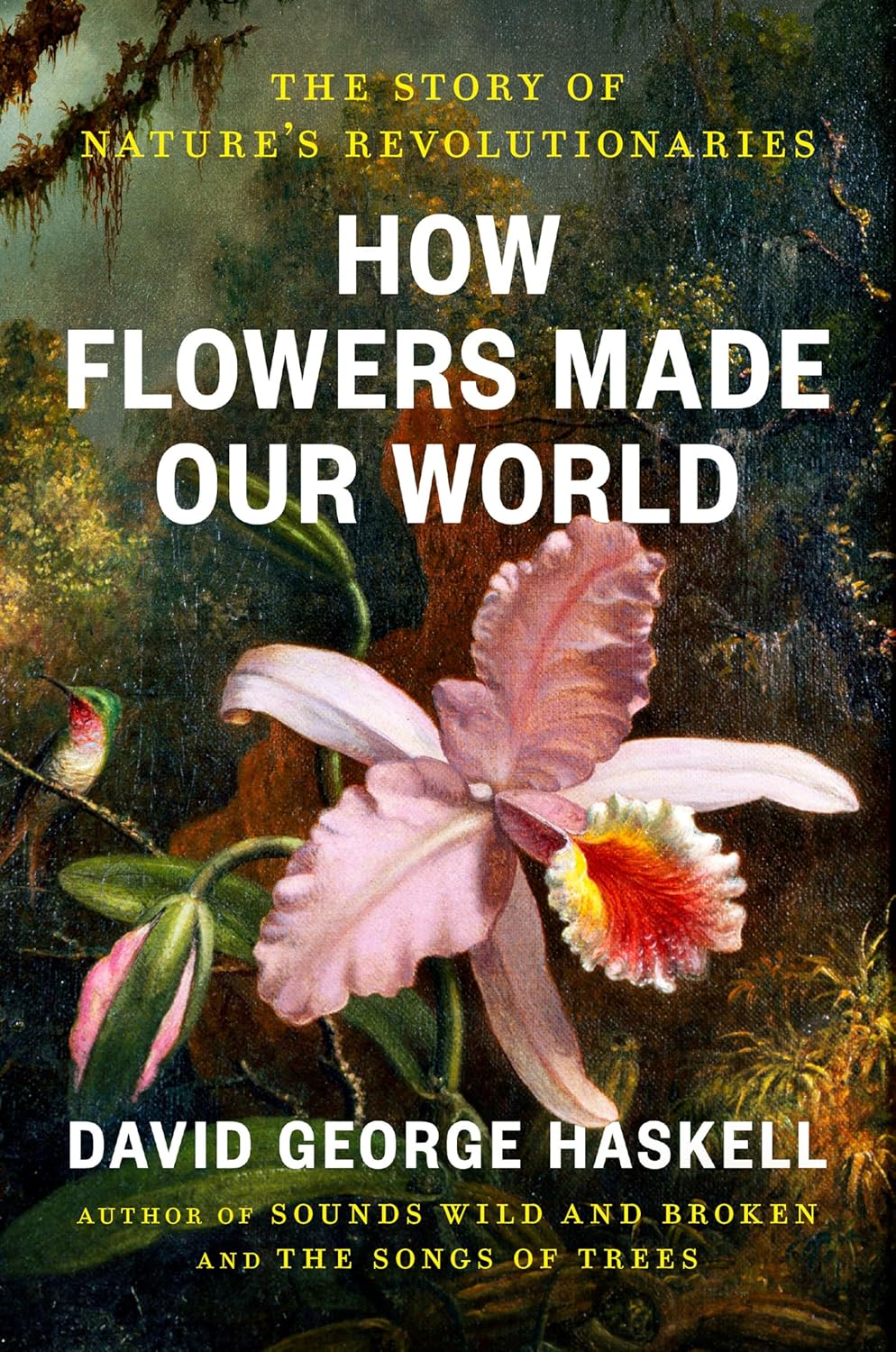
How Flowers Made Our World: The Story of Nature’s Revolutionaries

Viking |
Natural World

“A work of real passion.”—The New York Times

“A seamless melding of poetry and science.”Wall Street Journal

An exquisite exploration of the power of flowers, placing them at the center of the story of how evolution created the world we know today

We live on a floral planet, yet flowers don’t get the credit they deserve. We admire them for their aesthetics, not their power. In this examination of the role flowers played in creating the world we know today, David George Haskell observes, smells, and studies flowers such as magnolias, orchids, and roses, as well as fascinating but less celebrated flowers such as seagrasses and tea to show us what we’ve been missing.

Flowers are beautiful revolutionaries. When they evolved, they remade the natural world: Gorgeous petals and alluring aromas transformed former enemies into cooperative partners. Flowers reinvented plant sexuality and motherhood, bringing male and female together in the same flower and amply provisioning seeds and fruits, innovations that also feed legions of animals, ourselves included. Through radical genetic flexibility, flowers turned past environmental upheavals into opportunities for renewal. This inventiveness allowed them to build and sustain rainforests, savannahs, prairies, and even ocean shores.

Without flowers, human beings would not exist. We are a floral species. Flowers catalyzed our evolution, and we now depend on them for food and a healthy planet. When we perfume ourselves, give a loved one a bouquet, or use blooms in gardens and religious ceremonies, we honor the special bond between people and flowers. The study of flowers also shaped modern science and horticulture in ways both marvelous and, sometimes, unjust.

Looking to the future, flowers offer us lessons on resilience and creativity in the face of rapid environmental change. We need floral creativity, beauty, and joy more than ever. How Flowers Made Our World combines lyrical writing, sensual exploration, and the latest in scientific research to explore some of the most consequential life forms ever to have evolved, showing how our planet came to be and how it thrives today.

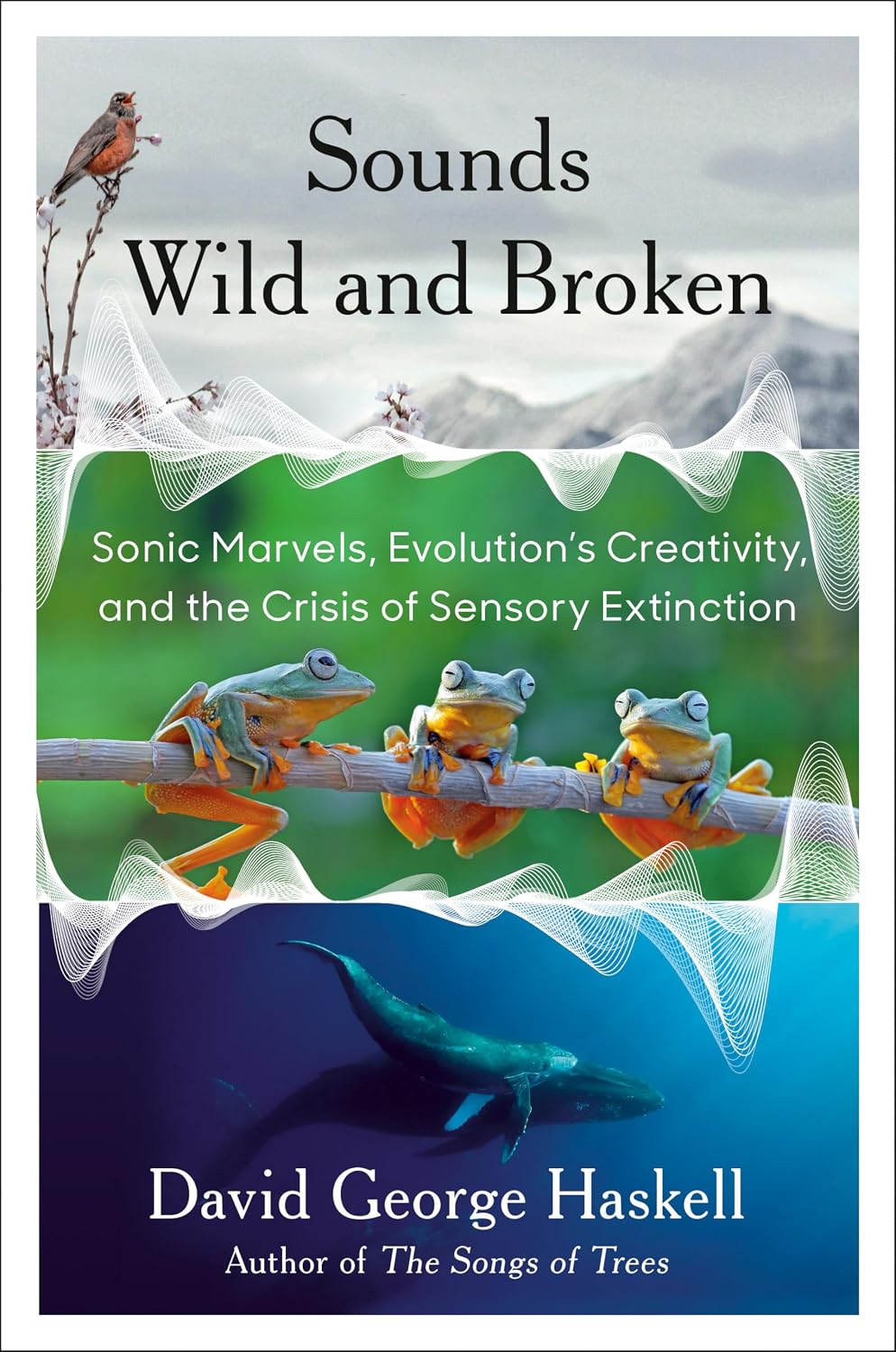
Sounds Wild and Broken: Sonic Marvels, Evolution’s Creativity, and the Crisis of Sensory Extinction

Viking |
Environmentalism

Finalist for the 2023 Pulitzer Prize in General Nonfiction and the 2023 PEN/E.O. Wilson Literary Science Writing Award

Winner of the Acoustical Society of America’s 2023 Science Communication Award

“[A] glorious guide to the miracle of life’s sound.” The New York Times Book Review
A lyrical exploration of the diverse sounds of our planet, the creative processes that produced these marvels, and the perils that sonic diversity now faces

We live on a planet alive with song, music, and speech. David Haskell explores how these wonders came to be. In rain forests shimmering with insect sound and swamps pulsing with frog calls we learn about evolution’s creative powers. From birds in the Rocky Mountains and on the streets of Paris, we discover how animals learn their songs and adapt to new environments. Below the waves, we hear our kinship to beings as different as snapping shrimp, toadfish, and whales. In the startlingly divergent sonic vibes of the animals of different continents, we experience the legacies of plate tectonics, the deep history of animal groups and their movements around the world, and the quirks of aesthetic evolution.

Starting with the origins of animal song and traversing the whole arc of Earth history, Haskell illuminates and celebrates the emergence of the varied sounds of our world. In mammoth ivory flutes from Paleolithic caves, violins in modern concert halls, and electronic music in earbuds, we learn that human music and language belong within this story of ecology and evolution. Yet we are also destroyers, now silencing or smothering many of the sounds of the living Earth. Haskell takes us to threatened forests, noise-filled oceans, and loud city streets, and shows that sonic crises are not mere losses of sensory ornament. Sound is a generative force, and so the erasure of sonic diversity makes the world less creative, just, and beautiful. The appreciation of the beauty and brokenness of sound is therefore an important guide in today’s convulsions and crises of change and inequity.

Sounds Wild and Broken is an invitation to listen, wonder, belong, and act.

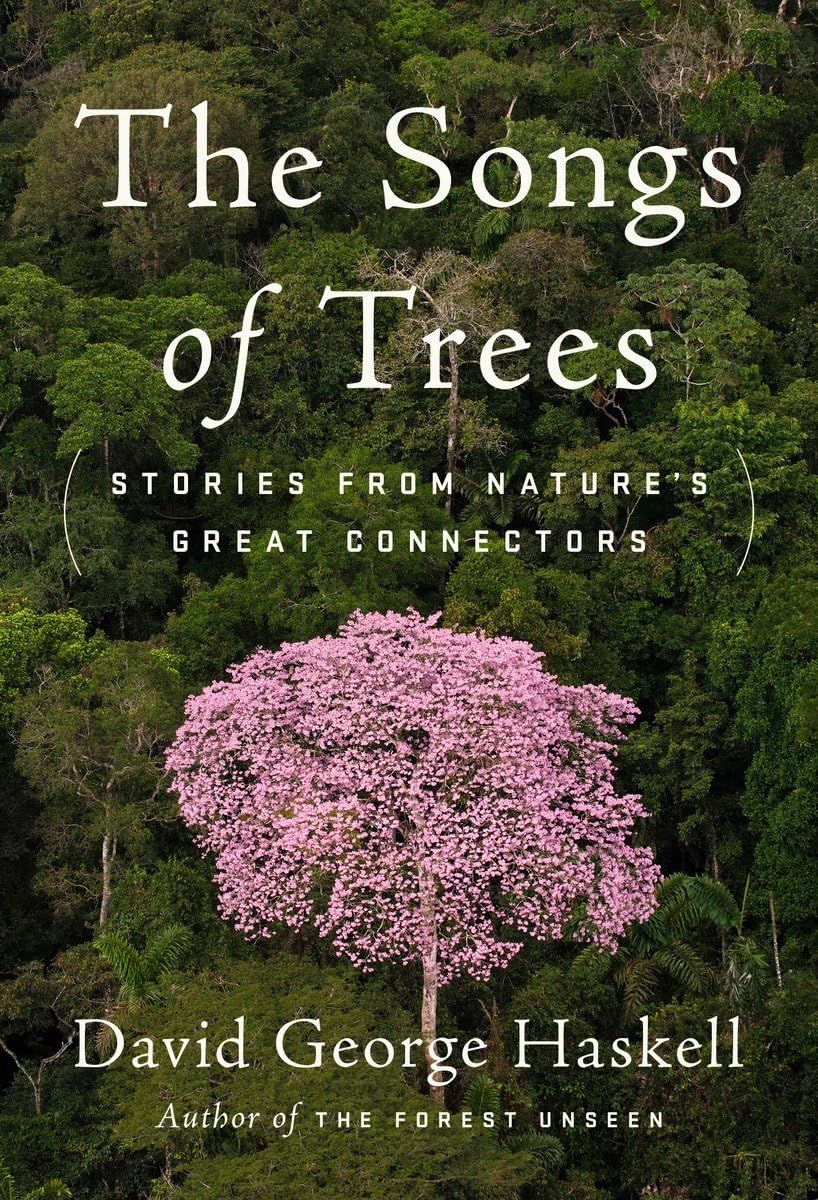
The Songs of Trees: Stories from Nature’s Great Connectors

Viking |
Ecology

The author of the Pulitzer Prize finalist The Forest Unseen visits with nature’s most magnificent networkers — trees 
 
“Both a love song to trees, an exploration of their biology, and a wonderfully philosophical analysis of their role they play in human history and in modern culture.” – Science Friday
 
WINNER OF THE 2018 JOHN BURROUGHS MEDAL FOR OUTSTANDING NATURAL HISTORY WRITING

David Haskell has won acclaim for eloquent writing and deep engagement with the natural world. Now, he brings his powers of observation to the biological networks that surround all species, including humans. Haskell repeatedly visits a dozen trees, exploring  connections with people, microbes, fungi, and other plants and animals. He takes us to  trees in cities (from Manhattan to Jerusalem), forests (Amazonian, North American, and boreal) and areas on the front lines of environmental change (eroding coastlines, burned mountainsides, and war zones.)  In each place he shows how human history, ecology, and well-being are intimately intertwined with the lives of trees.

Scientific, lyrical, and contemplative, Haskell reveals the biological connections that underpin all life.  In a world beset by barriers, he reminds us that life’s substance and beauty emerge from relationship and interdependence.

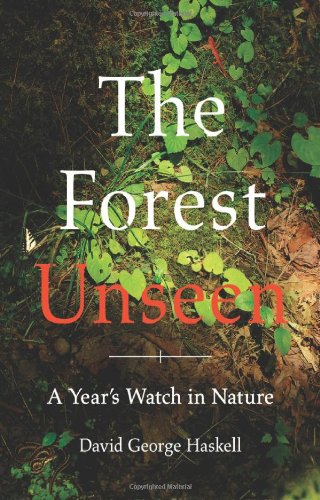
The Forest Unseen: A Year’s Watch in Nature

Viking |
Forests & Ecology

Winner of 2013 Best Book Award from the National Academies.
Finalist for 2013 Pulitzer Prize in General Nonfiction.

Winner of the 2013 Reed Environmental Writing Award.
Winner of the 2012 National Outdoor Book Award for Natural History Literature.

Runner-up for 2013 PEN/E. O. Wilson Literary Science Writing Award.

A biologist reveals the secret world hidden in a single square meter of forest

In this wholly original book, biologist David Haskell uses a one- square-meter patch of old-growth Tennessee forest as a window onto the entire natural world. Visiting it almost daily for one year to trace nature’s path through the seasons, he brings the forest and its inhabitants to vivid life.

Each of this book’s short chapters begins with a simple observation: a salamander scuttling across the leaf litter; the first blossom of spring wildflowers. From these, Haskell spins a brilliant web of biology and ecology, explaining the science that binds together the tiniest microbes and the largest mammals and describing the ecosystems that have cycled for thousands- sometimes millions-of years. Each visit to the forest presents a nature story in miniature as Haskell elegantly teases out the intricate relationships that order the creatures and plants that call it home.

Written with remarkable grace and empathy, The Forest Unseen is a grand tour of nature in all its profundity. Haskell is a perfect guide into the world that exists beneath our feet and beyond our backyards.

Authors-Unbound_icon-web-link.png

Lecture - How Flowers Made our World: Meet the Beautiful Revolutionaries

A lively celebration and exploration of flowers’ world-changing powers. Although we often dismiss flowers as merely ornamental, they built and now animate some of the world’s most vital habitats, including rainforests, prairies, deciduous forests, and coastal marshes. Our own species would not have evolved with flowering plants, grasses especially. Flowers truly made and sustain our modern world.

Three biological “superpowers” catalyze floral success. Flowers use beauty to transform former enemies into cooperative partners. They also expanded botanical motherhood through fruits and food stores in seeds. Last, radical genetic flexibility allowed flowers to turn past environmental upheavals into opportunities for renewal. Beauty, motherhood, and inner flexibility: a powerful combination.

The marvels of flowering plants offer us lessons about life’s creativity, the power of beauty and illusion, and the central importance of cooperation in tough times.

Authors-Unbound_icon-web-link.png

Lecture - Sound as Connection: Listening Across Species and Deep Time

Let’s listen to the voice of the living Earth! Sound is a great revealer. It passes through barriers, flows through darkness, and stitches living beings into communicative webs. Attentive listening reveals ecologies, histories, injustices, and future possibilities.

This talk explores the origins of the world’s amazing sonic diversity and exuberance. When did song evolve? Why does every species have a distinctive voice? Are human voices and music exceptional, and how are they rooted in our own species’ ecology? How are we humans changing the Earth’s soundscapes and how are other species responding? These stories show how we might listen—individually and collectively—to reconnect and defragment our lives.

The talk includes diverse sound recordings that bring to life the sonic wonders and brokenness of our world.

Authors-Unbound_icon-web-link.png

Lecture - Can “wild” sounds teach us what it means to be human?

With sound recordings and stories of sonic evolution, this talk explores how the world’s sonic diversity – both human and nonhuman – undermines ideas of human exceptionalism. Turning our ears toward these sounds also provides a useful foundation for ethical discernment, grounding us in lived sensory experience. The “simple” act of listening to and appreciating the sounds of insects, birds, and trees, then, is a radical act because it places us in relationship with other species and with processes that transcend human concerns. We hear these connections in human sound, too, especially in instrumental music which, from the start, has been an ecologically immersive art. The talk includes sound recordings from many different species, animating the ideas with sonic experiences.

Authors-Unbound_icon-web-link.png

Lecture - The Songs of Trees: Stories from Nature's Great Connectors

Trees show us that life is made from interconnection and relationship. Join David Haskell as he repeatedly visits a dozen trees around the world, exploring how each tree is a living community. He takes us to trees in cities (from Manhattan to Jerusalem), forests (Amazonian, North American, and boreal), and areas on the front lines of environmental change (eroding coastlines, burned mountainsides, and conflict zones.)  In each place he shows how human history, ecology, and well-being are intimately intertwined with the lives of trees.

Authors-Unbound_icon-web-link.png

Lecture - The Forest Unseen

What can close attention to one patch of forest teach us about life? Join David Haskell in a year-long meditation on a single square meter of forest, opening our senses to the lives of other beings. We learn not only about the marvels of the living forest—the interconnections, the hidden lives that make the forest thrive—but also come to see ourselves in new light. For all our failings, we belong here on this planet. Close attention to everyday marvels brings this truth to vivid light and suggests ways to live with more respect, joy, and attunement to the living Earth.

Authors-Unbound_icon-web-link.png

Workshop: Writing about sound. Writing with sound.

Sound’s textures and layers reveal stories that the other senses cannot perceive. We will use practices of attentive listening to draw these stories into awareness. Then, we’ll explore ways of bringing sonic experience to the page. The written word is a crystallization of sound (spoken words, frozen in ink), and we’ll also discuss how to honor and elevate the sonic qualities of our writing.

We listen with all parts of our bodies, and so all kinds of hearing abilities are welcome in this workshop.

Authors-Unbound_icon-web-link.png

Workshop: Contemplative practice and creative nonfiction.

What might we learn from paying repeated close attention to places and ecological relationships? Exercises and discussions in the workshop will focus on how to translate attention to seemingly minute and obscure details into larger-scale narratives.

Authors-Unbound_icon-web-link.png

Workshop: “Nature”, science, and narrative.

Scientific studies of life reveal marvels and brokenness. Yet, science can seem removed from everyday experience and too often proceeds behind walls of jargon and other forms of exclusion. We’ll experiment with using scientific understanding of the living Earth to create compelling and grounded narratives. The workshop assumes no scientific background, just curiosity.

Authors-Unbound_icon-web-link.png

Workshop: Listening, story-seeking, and creative writing.

We’ll use playful exercises in listening and other forms of sensory awareness to expand and enrich our writing. Deep, attentive listening helps us to excavate and share narratives and connections. In particular, listening blurs the boundaries between “nature” and culture,” reveals both belonging and injustice, and re-embodies us. Listening is also an act of resistance to the algorithms and other technologies that would have us forget the voices of others. The workshop is open to people with all kinds of hearing, and to anyone interested in experimenting with writing about “nature” and place.

David’s Events

David’s Essays & Op-Eds

Honors, Awards & Recognition

Two-Time Pulitzer Prize Finalist
Two-Time Finalist for the PEN/E. O. Wilson Literary Science Writing Award
Winner of the Acoustical Society of America’s Science Communication Award
The New York Times Editor’s Choice
American Academy of Arts and Letters Award in Literature Winner, 2024
National Academies’ Best Book Award Winner, 2013
Reed Environmental Writing Award Winner, 2013
National Outdoor Book Award for Natural History Literature Winner, 2012
John Burroughs Medal Winner, 2018
Dapeng Nature Writing Award Winner in its Chinese Translation, 2016
Iris Book Award Winner, 2020
Named one of the Best Science Books of 2017 by NPR’s Science Friday
10 Best Environment, Climate Science and Conservation Books of 2017 by Forbes

Media Kit

By clicking the link below you will be directed to a Google Docs Folder
where you can download author photos and cover images.

Similar Authors

Plant Ecologist, Educator & Writer
Zoë
Bestselling Author
Leigh Ann
New York Times Bestselling Author
Patricia
Mycologist
Cassandra
Author & Scientist

We’ve received your Message!

An AU Representative will connect with you as soon as possible.