
When Trees Testify is a beautiful journey through the imagination and intellect of one of our most important contemporary science writers. Montgomery is an inheritor of the Black ecological tradition, who brings her heart and knowledge to bear on the world around us, offering deep illumination and abundant wisdom.” — Imani Perry, National Book Award-winning author of South to America and Black in Blues

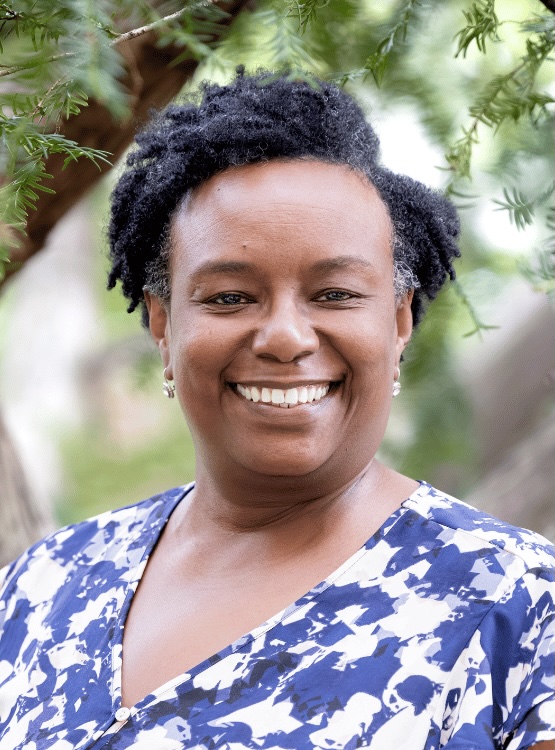
Beronda L. Montgomery, PhD is writer, science communicator, and researcher. She has spent 20 years in academia, most recently as Vice President for Academic Affairs/Dean (2022-2024) and Professor of Biology of Grinnell College (2022-present). Prior to that Dr. Montgomery was an endowed Professor of Biochemistry and senior administrator, including Assistant Provost of Faculty Development and Associate Vice President of Research and Innovation, at Michigan State University (2004-2022). She served as the Sally Starling Seaver Fellow at the Harvard University Radcliffe Institute for 2025–2026.

As a researcher, Dr. Montgomery studies how individuals perceive, respond to, and are impacted by environments in which they exist. Her laboratory-based research efforts are focused on the responses of photosynthetic organisms to external light and nutrient cues. Additionally, Dr. Montgomery pursues this theme in the context of effective mentoring and academic leadership.

Among other honors, Dr. Montgomery is a Fellow of the American Academy of Microbiology (2018), the American Association for the Advancement of Science (2020), the American Society of Plant Biologists (2021) and the American Society for Biochemistry and Molecular Biology (2022), as well as American Society for Cell Biology Mentoring Keynote honoree (2021). She was named one of Cell‘s Inspiring Black Scientists in America. Dr. Montgomery has received the Excellence in Diversity and Inclusion Award from the American Society of Plant Biologists (2024), Excellence in Supporting Diversity, Equity, Inclusion & Belonging from the North American Arabidopsis Steering Committee (2024), and 2023 Hutchinson Medal of the Chicago Horticultural Society. In 2025 she was named recipient of the Presidential Awards for Excellence in Science, Mathematics and Engineering Mentoring (PAESMEM), the Nation’s highest honors for mentors who work to develop fully the Nation’s human resources in STEM.

Dr. Montgomery is author of two books Lessons from Plants (Harvard University Press, 2021) and When Trees Testify (Heny Holt, 2026).
Beronda's Featured Titles

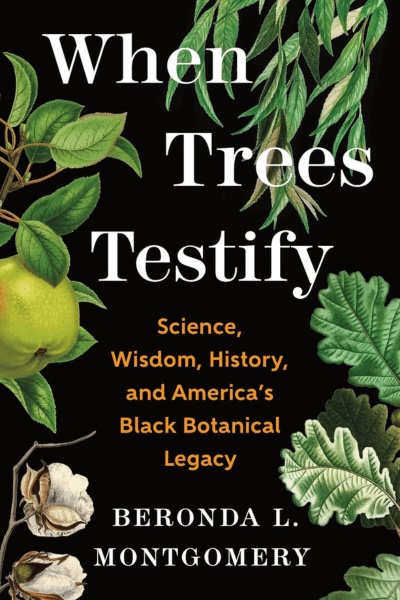
When Trees Testify: Science, Wisdom, History, and America’s Black Botanical Legacy

Henry Holt and Co. |
Botany & Biological Science

This stunning cultural and personal reclamation of Black history and Black botanical mastery offers up lessons from the natural world shared through the stories of long-lived trees.

The histories of trees in America are also the histories of Black Americans. Pecan trees were domesticated by an enslaved African named Antoine; sycamore trees were both havens and signposts for people trying to escape enslavement; poplar trees are historically associated with lynching; and willow bark has offered the gift of medicine. These trees, and others, testify not only to the complexity of the Black American narrative but also to a heritage of Black botanical expertise that, like Native American traditions, predates the United States entirely.

In When Trees Testify, award-winning plant biologist Beronda L. Montgomery explores the ways seven trees―as well as the cotton shrub―are intertwined with Black history and culture. She reveals how knowledge surrounding these trees has shaped America since the very beginning. As Montgomery shows, trees are material witnesses to the lives of enslaved Africans and their descendants.

Combining the wisdom of science and history with stories from her own path to botany, Montgomery talks to majestic trees, and in this unique and compelling narrative, they answer.

Lessons from Plants

Harvard University Press |
Botany

An exploration of how plant behavior and adaptation offer valuable insights for human thriving.

We know that plants are important. They maintain the atmosphere by absorbing carbon dioxide and producing oxygen. They nourish other living organisms and supply psychological benefits to humans as well, improving our moods and beautifying the landscape around us. But plants don’t just passively provide. They also take action.

Beronda L. Montgomery explores the vigorous, creative lives of organisms often treated as static and predictable. In fact, plants are masters of adaptation. They “know” what and who they are, and they use this knowledge to make a way in the world. Plants experience a kind of sensation that does not require eyes or ears. They distinguish kin, friend, and foe, and they are able to respond to ecological competition despite lacking the capacity of fight-or-flight. Plants are even capable of transformative behaviors that allow them to maximize their chances of survival in a dynamic and sometimes unfriendly environment.

Lessons from Plants enters into the depth of botanic experience and shows how we might improve human society by better appreciating not just what plants give us but also how they achieve their own purposes. What would it mean to learn from these organisms, to become more aware of our environments and to adapt to our own worlds by calling on perception and awareness? Montgomery’s meditative study puts before us a question with the power to reframe the way we live: What would a plant do?

Authors-Unbound_icon-web-link.png

When Trees Testify: Learning From and with Trees

In an engaging discussion of her book When Trees Testify, Montgomery discusses weaving together tree science, personal stories of her path to becoming a professional botanists, African American history, and Black agricultural legacy.

Authors-Unbound_icon-web-link.png

Lessons From Plants

The path towards seeing plants as powerful teachers is explored in this talk. As exemplified in her book Lessons from Plants, Montgomery provides accessible insights into plant biology that provides impactful insights for human thriving. Themes explored include adaptability for successful thriving in dynamic environments, creativity, the importance of diverse communities, succession planning, and environmental transformataion.

Beronda’s Events Link

Honors, Awards & Recognition

Sally Starling Seaver Fellow, Radcliffe Institute, Harvard University, 2025-2026
Recipient, Presidential Award for Excellence in Science, Mathematics, and Engineering Mentoring (PAESMEM), 2025
Recipient, Hutchinson Medal of the Chicago Horticultural Society, 2023
American Society of Plant Biologists, Recipient, Adolph E. Gude, Jr. Award, 2022
Cynthia Westcott Scientific Writing Award, Garden Communicators International, 2022
Charles Edwin Bessey Teaching Award, Botanical Society of America, Recipient, 2021
Elected Fellow, American Society for Biochemistry and Molecular Biology, 2022
Elected Fellow, American Society of Plant Biologists, 2021
Elected Fellow, American Association for the Advancement of Science (AAAS), 2020
Elected Fellow, American Academy of Microbiology. 2018
Cell Press CrossTalk’s 100 Inspiring Black Scientists in America List, 2020
Union of Concerned Scientists Science Defender, 2020

Media Kit

By clicking the link below you will be directed to a Google Docs Folder
where you can download author photos and cover images.

Similar Authors

Plant Ecologist, Educator & Writer
Jessica
Bestselling Author
David
Pulitzer Prize Two-Time Finalist
Kinari
Nonfiction Writer
Audrey
Environmental Diversity Expert

We’ve received your Message!

An AU Representative will connect with you as soon as possible.