

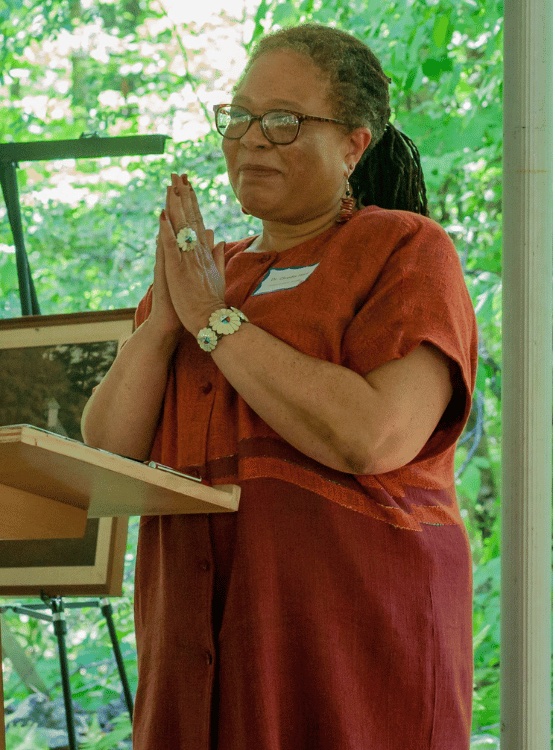
Dr. Claudia J. Ford is a professor of Environmental Studies at State University of New York, Potsdam, a Fellow of the Panel on Planetary Thinking at Justus Liebig University, Giessen, Germany, a Fulbright Scholar, a SUNY PRODiG Faculty, and a Research Professor and Distinguished Visiting Faculty at the University at Buffalo. Claudia began her career as a midwife and international women’s health specialist spanning four decades and all continents. Claudia is the author of a memoir and co-author of the text, Introduction to Environmental Studies. Claudia’s essays and articles have appeared in Art Review Oxford, Journal of the American Herbalists Guild, Journal of Global Ethics, Journal for the Study of Radicalism, Legacy, Manual, Orion Magazine, and the Journal of Theory in Action. Her new book project is funded by a research grant from the Kalliopeia Foundation, entitled, Grandmother Epistemology: Ecology, Culture, Spirit; revealing African American environmental wisdom and traditions for the purpose of planetary healing at this time of environmental crisis.

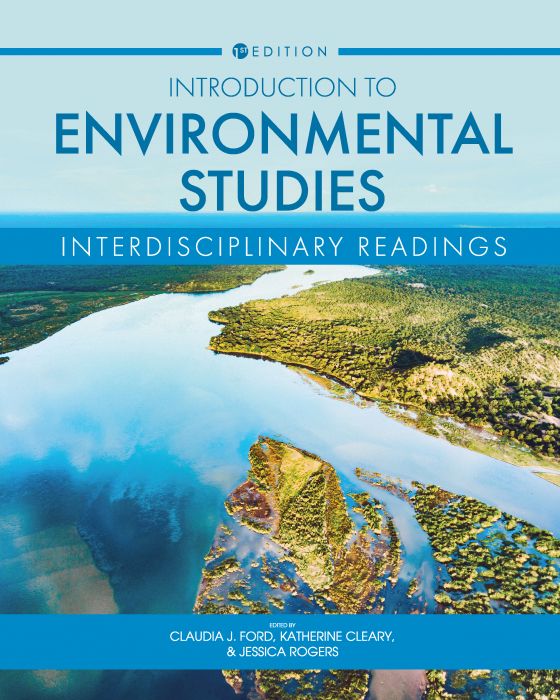
Introduction to Environmental Studies: Interdisciplinary Readings
Introduction to Environmental Studies: Interdisciplinary Readings provides students with a carefully selected collection of articles that help them navigate the most important topics in environmental studies, focusing on different connections between humans and the environment. The anthology emphasizes voices outside the white, male canon to provide students with diverse perspectives and a broader understanding of contemporary issues within the discipline.
Opening chapters introduce environmental studies, sustainability, and the connection between humans and the resources we extract from the environment. Subsequent chapters examine the history of environmentalism in North America, how our relationship to the environment has evolved over time, a concise survey of key environmental processes, and issues related to climate change and our climate crisis. Students read about the environmental impact of our food production processes on different countries and groups of people; issues related to environmental justice; the ways in which human population affects the environmental sustainability of our future; and sustainable energy issues. The anthology’s final chapters address environmental legislation and policies; ethical issues around consumption and collective responsibility; and the future of our environment.
Featuring compelling and timely readings, Introduction to Environmental Studies is an ideal resource for courses within the discipline.

 “When you start talking with Ford, soon you too find yourself comfortably talking about the interconnections between planetary materials, both animate and inanimate. Her enthusiasm is contagious.” — Jesus Francisco Sierra, Antioch Magazine