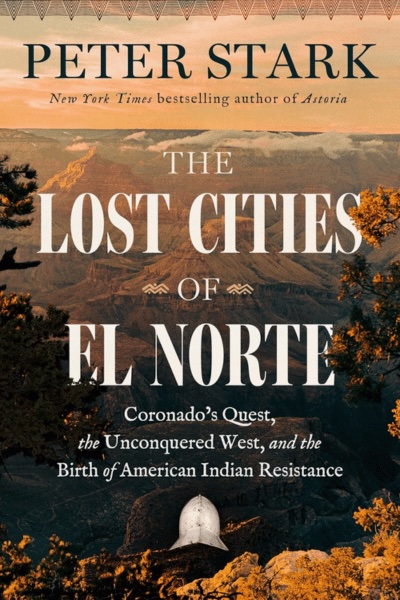

“… Stark smoothly alternates between Spanish and Native American perspectives as he brings to life his cast of characters along with their aspirations and conflicts. . . . Fascinating.” — Peter Cozzens, Wall Street Journal

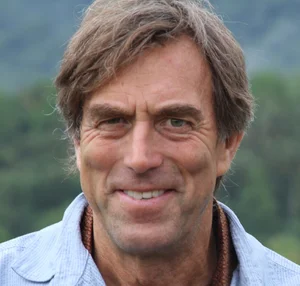
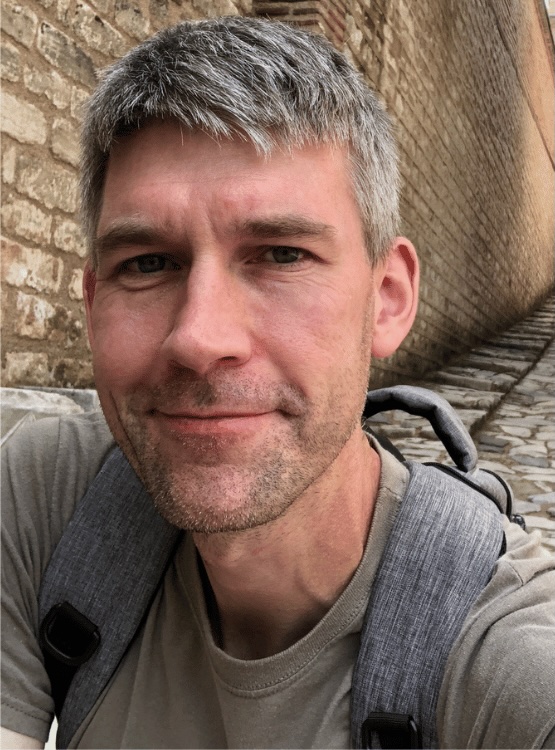
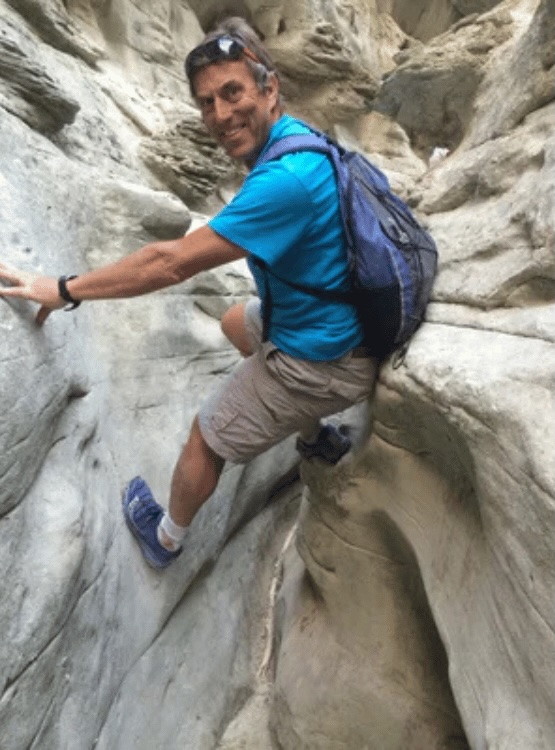
Peter Stark is an adventurer and historian. Born in Wisconsin, he grew up in an outdoorsy family and with a father who had a passion for American frontier history. Stark graduated with a BA in English and Anthropology from Dartmouth College and an MA in journalism from the University of Wisconsin, then struck off for places like Greenland and Tibet to write adventure-travel articles for magazines such as Outside, Smithsonian, The New York Times Magazine, and others. His article for Outside, “Leaps of Faith,” was a finalist for a National Magazine Award.

After paddling a kayak in the harrowing “first descent” of Mozambique’s Lugenda River for Outside (2002), and escaping confrontations with hippos, crocs, waterfalls, and black mambas around almost every bend, Stark, with a wife and children at home, pulled back from his own edgy adventures. He pivoted instead toward writing about the history of exploration and other explorers teetering on the brink. He has a special interest in how expedition leaders respond to extreme circumstances in the wilds, and the extreme cultural contrasts of “first contact” between Euro-American explorers and Indigenous people on the North American continent.

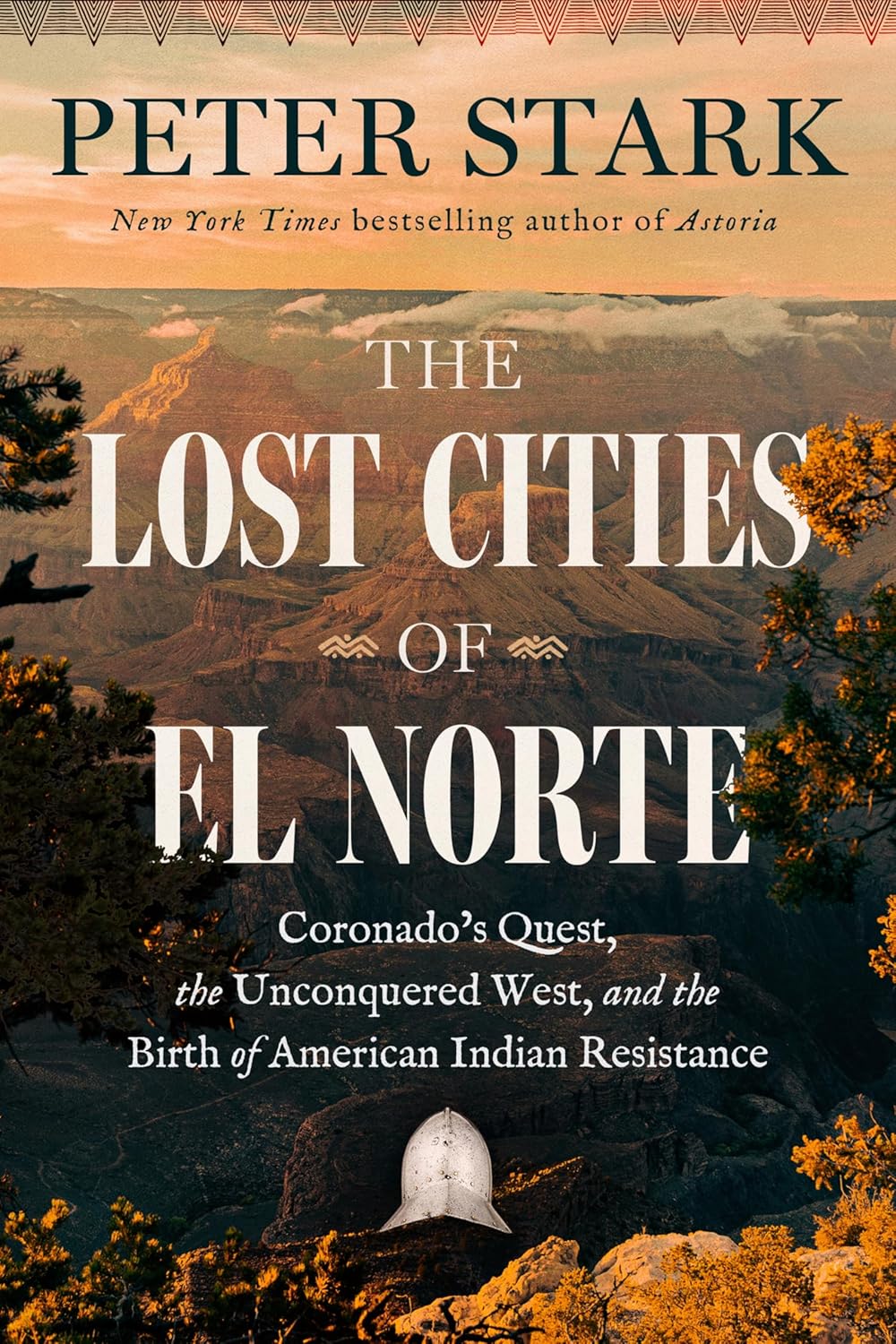
His books include Last Breath (2001, chosen as Amazon’s Best Outdoors Book of the Year), At the Mercy of the River (2005), The Last Empty Places (2010, reprinted by The Mountaineers Books, 2024), the New York Times bestseller Astoria (2014, finalist for the PEN USA award in research nonfiction), Young Washington (2018, finalist for the George Washington Book Prize), and Gallop Toward the Sun (2023). His most recent book is The Lost Cities of El Norte: Coronado’s Quest, the Unconquered West, and the Birth of American Indian Resistance (Mariner/HarperCollins, Spring 2026, chosen as Library Reads April 2026 pick for nonfiction, and Kirkus Reviews “Twenty Nonfiction Books that Read Like Novels,” May 2026).

He and his spouse, the writer and choreographer Amy Ragsdale, are based in Missoula, Montana. With their two (now-adult) children, the family has lived for a year each in Mozambique in Southeast Africa, and in Alagoas in Northeastern Brazil.
Peter's Featured Titles

The Lost Cities of El Norte: Coronado’s Quest, the Unconquered West, and the Birth of American Indian Resistance – A Narrative History of Exploration, Conquest, and Resistance

Mariner Books |
Indigenous History

“Peter Stark is a uniquely gifted storyteller.” –DORIS KEARNS GOODWIN

By the bestselling author of Astoria, a thrilling and masterfully crafted narrative of “one of history’s classic sagas of adventure and first contact” (Hampton Sides): Conquistador Francisco Coronado’s expedition across 2,500 miles of the vast, unconquered North American interior—“El Norte Misterioso.”

In 1540, the grandest exploring expedition ever assembled in the Americas paraded north from the ruins of the Aztec capital Tenochtitlan, a glittering column of 2,000 men heading into the unknown. Their destination was El Norte Misterioso—The Mysterious North, present-day United States—where fabulous cities of gold were rumored to shine beyond the horizon. Two years later, survivors began stumbling back, half dead. Lost to poisoned arrows, brutal deserts, starvation, cold, desertion, and countless other hardships, 90% of those who left would never return.

Led by Francisco Coronado and backed by the full weight of the Spanish empire, the superpower of its day, they had expected to seize the land, steal its riches, and subjugate its peoples, just as they had so recently done to the mighty Aztec and Inca empires. But instead they encountered the unconquered American West, populated by complex societies of indigenous nations, masters of a vast and unforgiving landscape who fiercely resisted this European “incursion” onto their lands.

Coronado and his people traversed 2,500 miles of unmapped terrain, ranging across the present-day U.S. states of California, Arizona, New Mexico, Texas, Oklahoma, and finally Kansas. They were the first Europeans to gaze upon the Grand Canyon and the Rocky Mountains; made first contact with the Puebloan peoples; crossed the Sonoran Desert and the Great Plains, where they encountered endless herds of bison and the nomadic tribes who followed them. After leading the largest exploring cavalcade ever assembled in the New World, wearing his gilded armor and bobbing plume, Coronado retreated back to Mexico City two years later accompanied only by a hundred or so hangers-on and carried on a litter, a broken man. America’s Southwest and Plains would remain unconquered for the next 300 years.

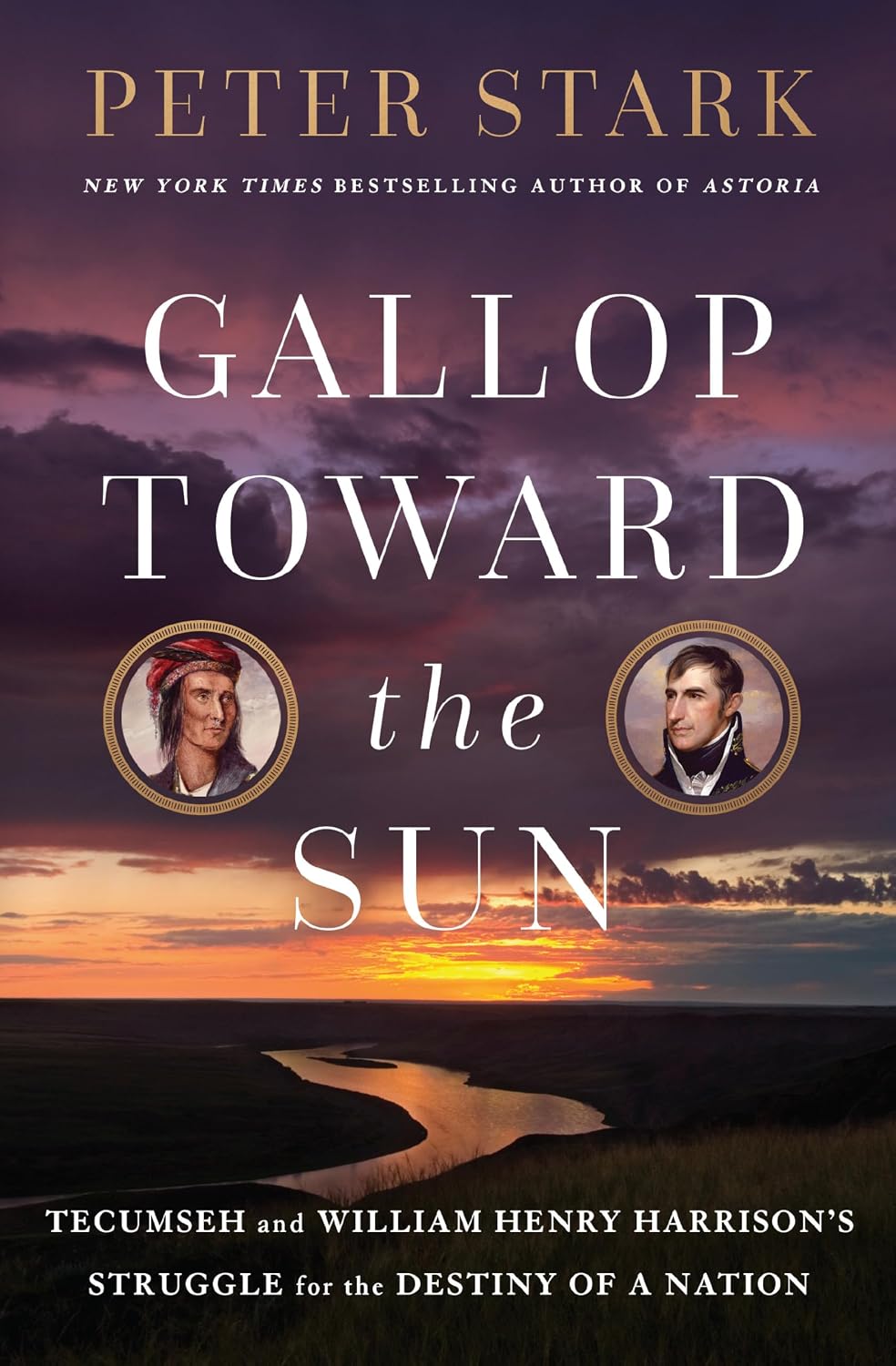
Gallop Toward the Sun

Random House |
Indigenous History
A vivid account of the rivalry between future president William Henry Harrison and the Shawnee chief Tecumseh—and of the Native American alliance that fought westward expansion—from the New York Times bestselling author of Astoria

“Taut, multi-layered . . . a much-needed reevaluation of this crucial period of our nation’s history.”—Laurence Bergreen, author of Over the Edge of the World

The conquest of Indigenous land in the eastern United States through corrupt treaties and genocidal violence laid the groundwork for the conquest of the American West. In Gallop Toward the Sun, acclaimed author Peter Stark exposes the fundamental conflicts at play through the little-known but consequential struggle between two extraordinary leaders.

William Henry Harrison was born to a prominent Virginia family, the son of a signer of the Declaration of Independence. He journeyed west, became governor of the vast Indiana Territory, and sought statehood by attracting settlers and imposing one-sided treaties.

Tecumseh, by all accounts one of the nineteenth century’s greatest leaders, belonged to an honored line of Shawnee warriors and chiefs. His father, killed while fighting the Virginians flooding into Kentucky, extracted a promise from his sons to “never give in” to the land-hungry Americans. An eloquent speaker, Tecumseh traveled from Minnesota to Florida and west to the Great Plains convincing far-flung tribes to join a great confederacy and face down their common enemy. Eager to stop U.S. expansion, the British backed Tecumseh’s confederacy in a series of battles during the forgotten western front of the War of 1812 that would determine control over the North American continent.

Tecumseh’s brave stand was likely the last chance to protect Indigenous people from U.S. expansion—and prevent the upstart United States from becoming a world power. In this fast-paced narrative—with its sharply drawn characters, high-stakes diplomacy, and bloody battles—Peter Stark brings this pivotal moment to life.

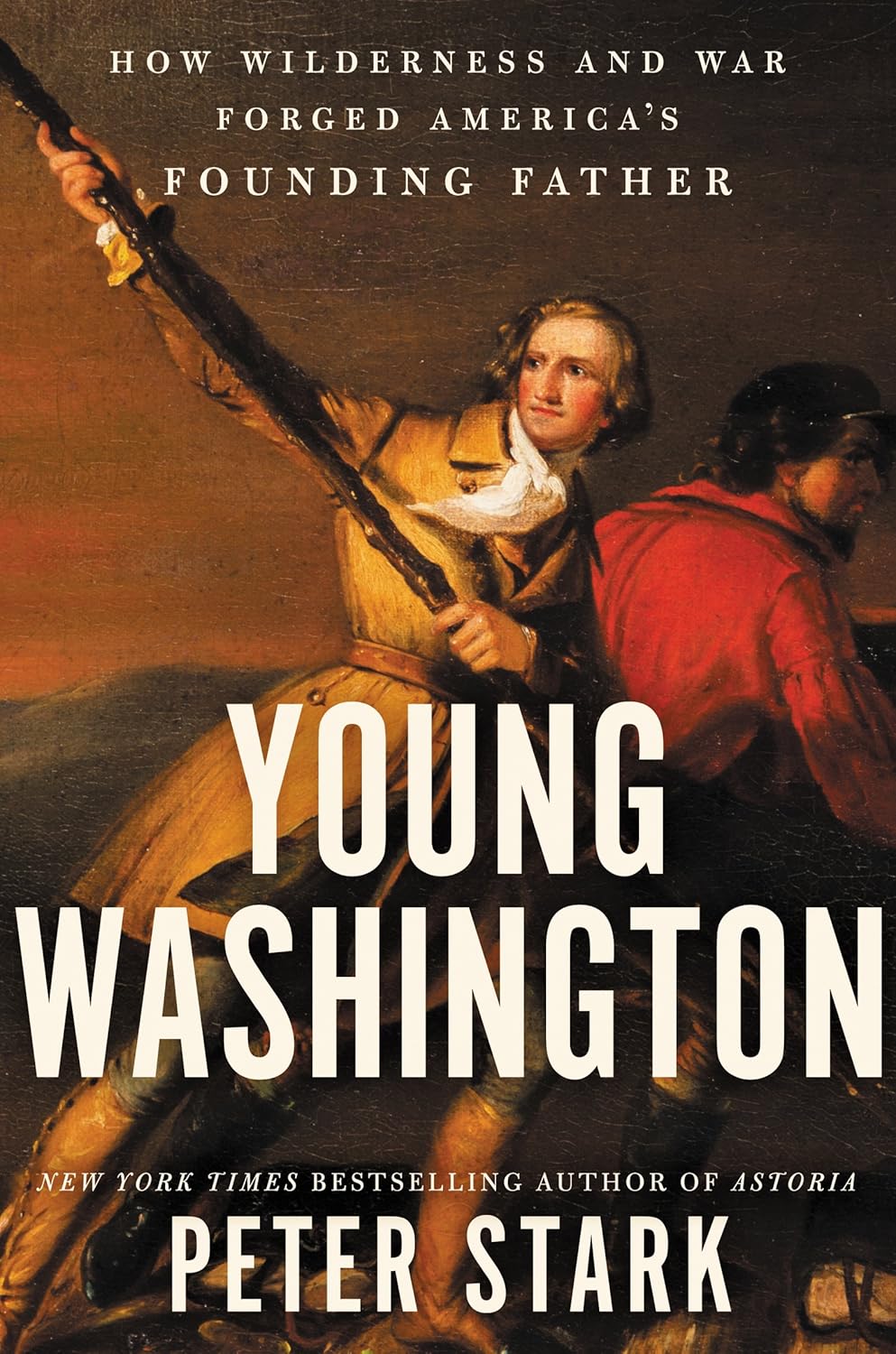
Young Washington: How Wilderness and War Forged America’s Founding Father

Ecco |
History

FINALIST FOR THE GEORGE WASHINGTON BOOK PRIZE

The true story of a Founding Father: a new, brash, and unexpected view of the president we thought we knew, from the bestselling author of Astoria.

“Lively, well-researched . . . . A discerning history of pre-Revolutionary America and the man who shaped its future.” – Kirkus Reviews

Two decades before he led America to independence, George Washington was a flailing young soldier serving the British Empire in the vast wilderness of the Ohio Valley. Naïve and self-absorbed, the twenty-two-year-old officer accidentally ignited the French and Indian War―a conflict that opened colonists to the possibility of an American Revolution.

With powerful narrative drive and vivid writing, Young Washington recounts the wilderness trials, controversial battles, and emotional entanglements that transformed Washington from a temperamental striver into a mature leader. Enduring terrifying summer storms and subzero winters imparted resilience and self-reliance, helping prepare him for what he would one day face at Valley Forge. Leading the Virginia troops into battle taught him to set aside his own relentless ambitions and stand in solidarity with those who looked to him for leadership. Negotiating military strategy with British and colonial allies honed his diplomatic skills. And thwarted in his obsessive, youthful love for one woman, he grew to cultivate deeper, enduring relationships.

By weaving together Washington’s harrowing wilderness adventures and a broader historical context, Young Washington offers new insights into the dramatic years that shaped the man who shaped a nation.

Authors-Unbound_icon-web-link.png

Young Washington: How Wilderness and War Forged the Founding Father (and how close we came to losing him when a young man!) - A Talk Celebrating the 250th

This is the title of my book, published by Ecco/HarperCollins in 2018, a historical account of the young GW that was a finalist for the prestigious George Washington Book Prize. I’ve given dozens of talks on Young Washington over the years and countless radio and podcast interviews and have recently been commissioned to give talks on young GW for America’s 250th anniversary. A major Hollywood film by the same title, Young Washington, will be released on July 3rd, which used my book Young Washington as one of the major sources.

Young GW made a fascinating transformation. This guy was a real mess in his 20s — including being in love with his best friend’s wife, at odds with his British commander, and rashly igniting the French and Indian War in the Ohio wilderness. But eventually he figured it out (often the hard way!) and became a great leader. The struggle of his journey from flawed human to revered Founder is a good example for us all.

Authors-Unbound_icon-web-link.png

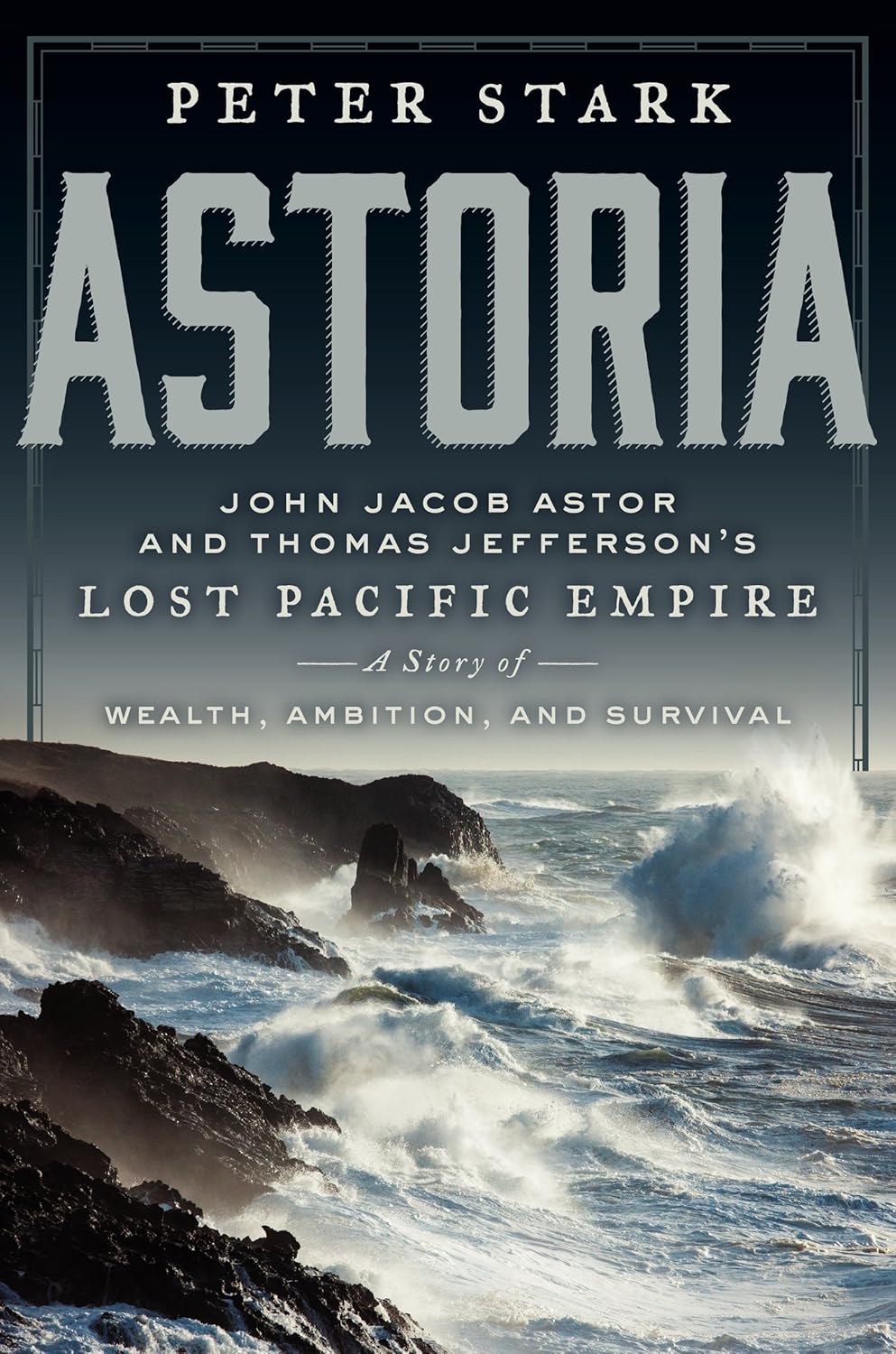
Astoria: John Jacob Astor and Thomas Jefferson's Lost Pacific Empire - Dueling Leadership Styles in a Hostile Landscape, or, Why the West Coast Is Not British

I’ve given many talks on this subject, based on my NYT-bestselling book, Astoria, about John Jacob Astor’s monumental expedition in 1810 to establish the first American Colony on the remote, wild Pacific Coast. This true adventure-story vividly illustrates different leadership styles in the most high-pressure situations, where the consequences of a bad decision were often death and where, under incredible strain, some members plunged into madness. Three leaders — the autocratic Captain Thorn, leader of the Sea-Going Party, vs. the equivocating, inexperienced head of the Overland Party, Mr. Hunt, vs. the conniving, duplicitous McDougall who ultimately takes control of the Astoria colony itself — demonstrate contrasting styles. Which leadership style ultimately proves most effective? Who survives? These are valuable, hard-won lessons for leaders today.

At the same time, the fate of the entire Pacific Coast was “up in the air.” The Spanish Empire was threatening to claim it from the south, the Russian Empire was threatening to claim it from the north, while the British Empire in Canada and the young U.S., beginning its Westward Movement from the East Coast, vied against each other to claim it for themselves.

This was truly a pivotal moment in American history.

Authors-Unbound_icon-web-link.png

The Last Empty Places and the Shifting American Attitude Toward Nature: Where Do We Go Next in the Age of Climate Change?

When the Puritans landed in the early 1600s, their religion cast the American wilderness as the abode of Satan. That attitude has shifted dramatically over the ensuing centuries, helped along by American natural philosophers like Henry David Thoreau and Aldo Leopold, leading to the creation of National Parks and wilderness areas, and now to the point where we’re even “rewilding” damaged landscapes. The big question is: Where do we go from here? Of course, for the Native tribes on the continent, it never was “wilderness.” It was home. This talk is based on my book The Last Empty Places (Ballantine, 2010; reissued by Mountaineers Books, 2023).

Authors-Unbound_icon-web-link.png

The Battle With No Name: How the Founders Relented and Finally Created a Standing Army Though It Was the Last Thing They Wanted

It is not surprising that the U.S. Army and its related branches were created as a non-partisan military. What is surprising is that it was created at all. America’s Founders dreaded the possibility that their new nation would end up with a “standing army” — a permanent, national armed force — once the Revolution ended. The Founding Fathers believed a standing army is what the “tyrants of Europe” employed to suppress the common people. To circumvent that possibility, the Continental Army was disbanded at the end of the Revolutionary War, except for just a handful of soldiers. The decision was that the new nation would rely primarily on local and state militias to provide its defense.

Then, in 1791 in the Ohio Valley wilderness, a coalition of Native warriors utterly destroyed a large U.S. force that was a cobbled-together patchwork of these militias. It was such a humiliation that it has gone largely unremarked in our conventional telling of U.S. history, and thus is sometimes called “The Battle With No Name.” Yet it was due to this little-known battle, that President Washington and Congress relented, realizing that the infant nation needed a permanent, professional fighting force in order to survive.

The result has been the world’s most powerful military — today known as the U.S. Army and its related branches. It was one of the Founders’ most deeply held principles that one individual could not be allowed to wield this national force for personal or partisan reasons.

Authors-Unbound_icon-web-link.png

Indian Lands Shall Never Be Taken From Them Without Their Consent: Native Lands and the Nation's Founding

The Founding Fathers explicitly recognized the sovereignty of Indian tribes — Native nations — in the earliest documents laying the foundations of the United States. In the Northwest Ordinance of 1787, Congress clearly stated that “[tribal lands] shall never be taken from them without their consent,” and that “utmost good faith shall always be observed toward the Indians.”

But what happened in the next few decades — from the 1780s to 1815 — set the U.S. on the path that ultimately deprived Indian tribes of 95 percent of their original lands. This talk, related in a storytelling style, explains what happened.

The talk is based on my 2023 book, Gallop Toward the Sun: Tecumseh and William Henry Harrison’s Struggle for the Destiny of a Nation.

Authors-Unbound_icon-web-link.png

The Age of Discovery and the Opening of Global Trade: Why the 2020s Resemble the 1420s and What We Can Learn From It

As the advent of Artificial Intelligence brings human society to the cusp of a New World, a glance back 600 years ago to 15th century Europe reveals a similar startling and pivotal moment in human history. It is a moment from which we, today, can learn.

Starting in the 1420s, “Prince Henry the Navigator,” of Portugal, spearheaded a major technological breakthrough and launched what would become known as the “Age of Discovery” or the “Age of Exploration.” Portuguese ship designers invented a fast, lightweight craft called a caravel that could navigate both open ocean and shallow coastal waters, as well as sail close to the wind. Under Prince Henry’s sponsorship, Portuguese explorers began probing down the West Coast of Africa — past fearsome “Cape No” (in today’s Morocco) and into the Unknown.

Their first goal was to find the source of gold and slaves that were being transported overland by Arab traders from somewhere in Africa, north across the Sahara Desert, and into North African markets along the Mediterranean. They also sought to locate a Christian king, known as Prester John, rumored to live in Africa. For decades, these pioneering Portuguese navigators inched their way down Africa’s West Coast and finally landed south of the Sahara where they established their own trade in gold and slaves, thereby launching the wealthy Portuguese Empire. Carrying on even after Prince Henry’s death, these Portuguese navigators eventually “discovered” the southern tip of Africa, rounded it, and sailed across the ocean to India. Here they found incredible wealth — in the form of exotic spices such as pepper and cinnamon that were literally worth their weight in gold back in Europe.

Thus was launched the Age of Exploration. Columbus, in competition with the Portuguese, sailed westward for Spain and “discovered” the New World.

Based on the exploration history of Africa as told in my book “At the Mercy of the River” (2005), this lively talk relates the story of these adventurers who looked over the horizon and also explores the parallels with the pioneering of today’s AI technology.

Authors-Unbound_icon-web-link.png

Probing the Limits of Human Endurance

The human body is both an amazingly resilient and an amazingly fragile organism. It evolved in the warm, watery tropical regions of the Earth, and then ventured North and South into colder, harsher climates. To make this journey, humans had to innovate new strategies to adapt — harnessing fire, designing warm clothing, building snug houses.

“You grasp your terrible misunderstanding, a whole series of misunderstandings, like a dream ratcheting into wrongness. You’ve shed your clothes, your car, your oil-heated house in town. Without this ingenious technology you’re simply a delicate, tropical organism whose range is restricted to a narrow sunlit band that girds the earth at the equator.

And you’ve now ventured way beyond it.”

— from “Frozen Alive,” an article for Outside magazine and also the first chapter of my book, Last Breath: Cautionary Tales from the Limits of Human Endurance.

Based on Last Breath, this talk weaves together stories of adventurers who have gone too far, along with an exploration of the science of the human body as it undergoes hypothermia, heat stroke, dehydration, attack by venomous creature, etc. I’ve given variations on this talk many times. Some years ago, I was commissioned by a medical association to give a talk to a Russian icebreaker full of 100 ER docs on a cruise to Antarctica. Concerned the ER docs might know much of the material due to their own training, I built the talk around a “quiz show” format challenging them to answer 10 multiple choice questions on a medical subject I was sure they knew very little about, but I did — scurvy.

Authors-Unbound_icon-web-link.png

The 400 Year Search for the Northwest Passage and How it is Finally Appearing Through the Melting Ice

For four hundred years, roughly 1500 to 1900, European and American explorers searched for the “Northwest Passage.” If it existed, this “passage” would provide a water route through the North American Continent, or north of it, that would allow ships to pass easily from the Atlantic to Pacific oceans, or vice versa. This could open up a fast, efficient, and hugely profitable trade between the Orient and Europe and North America.

When the Northwest Passage was finally discovered in 1906, it was found to be so ice-clogged as to be impractical for commercial navigation. Yet, by the early 2000s, global warming had significantly reduced the icepack that jammed it. It is now looking as though it will be a practical passage for navigation very soon.

Given the increasing “value” of the Arctic to world powers due to the opening of the Northwest Passage, it is no wonder that President Trump covets a vast piece of Arctic real estate called Greenland.

This talk is based on the years of research I’ve done into exploration history, and especially research for a collection I edited about the Arctic, “Ring of Ice” (2000).

Peter’s Events

Peter’s Articles

Last Empty Places Podcast Link

Honors, Awards & Recognition

New York Times Bestseller — Astoria (2014)
PEN USA Research Nonfiction Finalist — Astoria (2014)
George Washington Book Prize Finalist — Young Washington (2018)
Best American Essays — Nature Writing, Sports Writing (2001), (2019)
Amazon #1 Outdoor Sports Book — Last Breath (2001)

Media Kit

By clicking the link below you will be directed to a Google Docs Folder
where you can download author photos and cover images.

Similar Authors

Jonathan

Eig

Pulitzer Prize Winning Author
Sam
New York Times Bestselling Author
Larry
New York Times Bestselling Author & Screenwriter
Elizabeth
NYT Bestselling Author
Lynne
Journalist & Author of Historical Nonfiction

We’ve received your Message!

An AU Representative will connect with you as soon as possible.